Be Inspired: Poet Pavana Reddy
If you’ve followed my earlier work with the Improving South Asian American Experiences (ISAASE) initiative, you may recognize Be Inspired as a project rooted in the belief that representation matters, and that diverse stories of success matter. This series was created to spotlight South Asian Americans whose lives and careers move beyond narrow expectations, offering younger generations a wider sense of what is possible.
For this conversation, I spoke with Pavana Reddy (you may be following her already on Instagram as @MazaDohta), a writer and poet whose work explores identity, grief, belonging, and emotional honesty. Pavana’s writing has been featured in Land of Gold, the Grammy-nominated album by Anoushka Shankar, and in her debut poetry collection, Rangoli. Much of her work has also found a wide audience online, where her words resonate deeply with readers navigating similar questions of selfhood and feeling.
In this conversation, Pavana reflects on growing up in Canada with a persistent sense of otherness, the profound impact of losing her sister, and how grief reshaped both her life and her writing. She speaks candidly about silence in immigrant families, the role of language in survival, and why it is so important—especially for young people—to share what they are feeling rather than carry pain alone.
Throughout the interview, Pavana returns to the idea that expression is not indulgence, but necessity; and that listening, whether as peers, educators, or community members, can be lifesaving.
Tell us a little about your poetry.
I’ve been living in LA for almost 12 years now, I moved here when I was a kid from Kamloops, British Columbia with my mom and my brother. I have been writing all my life, but have only recently turned my love for words into a career!
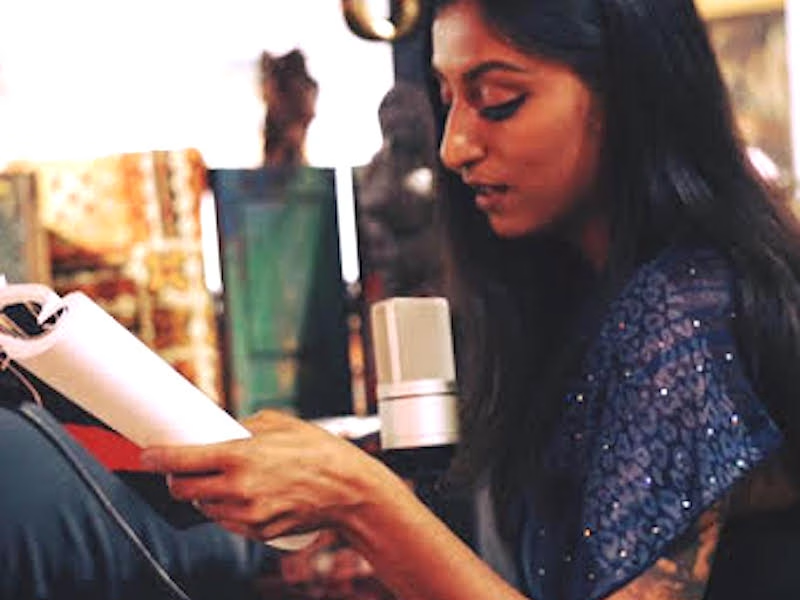
When I first started sharing my work online, I wasn’t very serious about it and I really just wanted an outlet for the things I was too afraid to say.
My poetry is very much a reflection of who I am. I started writing as a kid, simply as a way to verbalize feelings I didn’t know how to talk about – and while my writing has definitely improved since – I still write for the same reasons.

What inspires your writing?
I grew up a fantasy buff, I’d write cheesy love poems that rhymed and stories about unicorns. It wasn’t until I lost my sister that my writing started to change; I lost her to suicide from the constant bullying she received in school for being different — I remember her coming home crying after being teased for being too dark, or her hair too curly and unkept — so my writing grew to reflect the pain and questions I’ve been carrying with me ever since.
“I remember her coming home crying after being teased for being too dark, or her hair too curly and unkept — so my writing grew to reflect the pain and questions I’ve been carrying with me ever since.”
Pavana Reddy
Tell us about growing up.
Growing up was very hard. We moved to a small town in Canada from Fiji and we were one of the only brown families in our town; the constant tension and sense of otherness I grew up with was definitely internalized, which is why I write a lot about the topics that I do.
I don’t have any regrets about the way I grew up. I am very lucky to say that the challenges I faced outside of my home were never ones I had to face at home.

Is there anything you wish had been different?
If anything, I wish I had the language I have now to have been able to save my sister from the pain she silently carried for years. After her death, I didn’t have anyone to talk to. My teachers were not as accessible as they should have been, and coming from such a small town also kept me from speaking to my peers; so I turned to books for company. I would read so much that the characters would become my friends, and that helped me deal with my sense of disconnect. I realized I wasn’t in alone if how I felt, and that brought me a lot of comfort.
As is the case with most immigrant families, shouldering pain silently is something we master at a young age, and it took me a really long time to understand this.
“If anything, I wish I had the language I have now to have been able to save my sister from the pain she silently carried for years.”
Pavana Reddy
What do you want the next generation of South Asian Americans to know?
Our community has come such a long way, but we still have room to grow when it comes to dealing with depression and mental health, and we need to learn to start talking about these things so we can all heal together.
My message to young South Asians is to not be afraid to talk, to seek out someone who will listen to you because your feelings are valid and should be heard. Stop letting that archaic idea of shame guide you. Never be afraid to be different. We are such a magical, diverse group of people, don’t let anyone make you believe otherwise.
“We are such a magical, diverse group of people, don’t let anyone make you believe otherwise.”
Pavana Reddy

What should the educators who work with young South Asian American kids know?
I think the biggest lesson educators or counselors need to learn is to listen, and to really understand. The greatest creators in the world are still in high school – we should be learning from them.
One of the most frustrating parts of school for me was believing there was something wrong with my feelings because the adults I spoke to couldn’t relate, and I believe that’s one of the main reasons why kids don’t feel comfortable speaking up for themselves. Listening is key.
What does Maza Dohta mean?
I made a tumblr and used the pseudo name, “Maza Dohta”, which I got from one of my favorite books, IQ84 by Haruki Murakami. In Japanese, Maza and Dohta have multiple meanings, but within the context of the book the terms refer to the connection between the mind and the body.
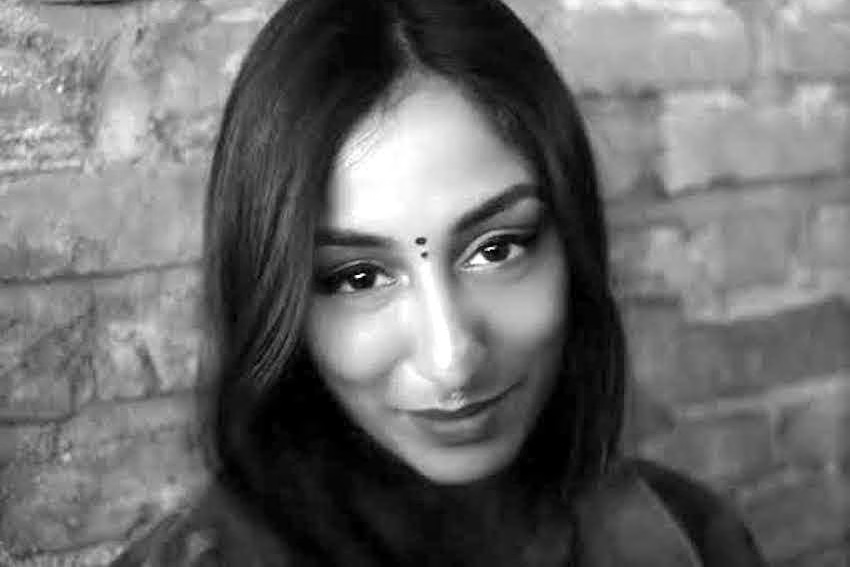
You can follow Pavana on Instagram @mazadohta. You can purchase Rangoli on Amazon here.
About Be Inspired
This interview is part of Be Inspired, a curated archive of conversations and profiles spotlighting South Asian Americans living bold, often un-stereotypically inspiring lives. Originally created through the Improving South Asian American Experiences (ISAASE) initiative, these stories are preserved here as part of an ongoing commitment to representation, storytelling, and expansive definitions of success.