
How I Studied for Doctoral Comps Using a Chalk Wall
There’s a wall in my house that for a few months of 2016 while I prepped for my doctoral comprehensive exams, was covered (floor to ceiling) in chalk. On the wall: education policy frameworks, names, dates, theories, study findings, citations from a hundred different readings, all written out by hand in chalk, and organized into themes that only made sense to me. And for weeks on end, I paced in front of that wall reading it out loud, with a sleeping baby strapped to me in a baby-wrap while I had fake exam conversations with my imagined committee.
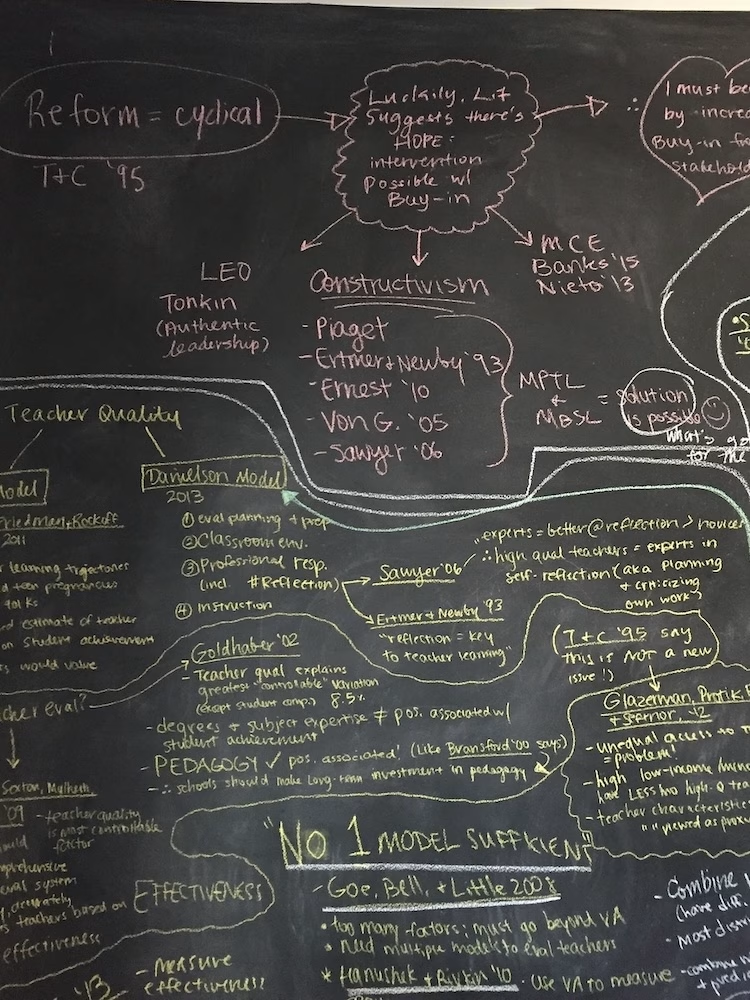
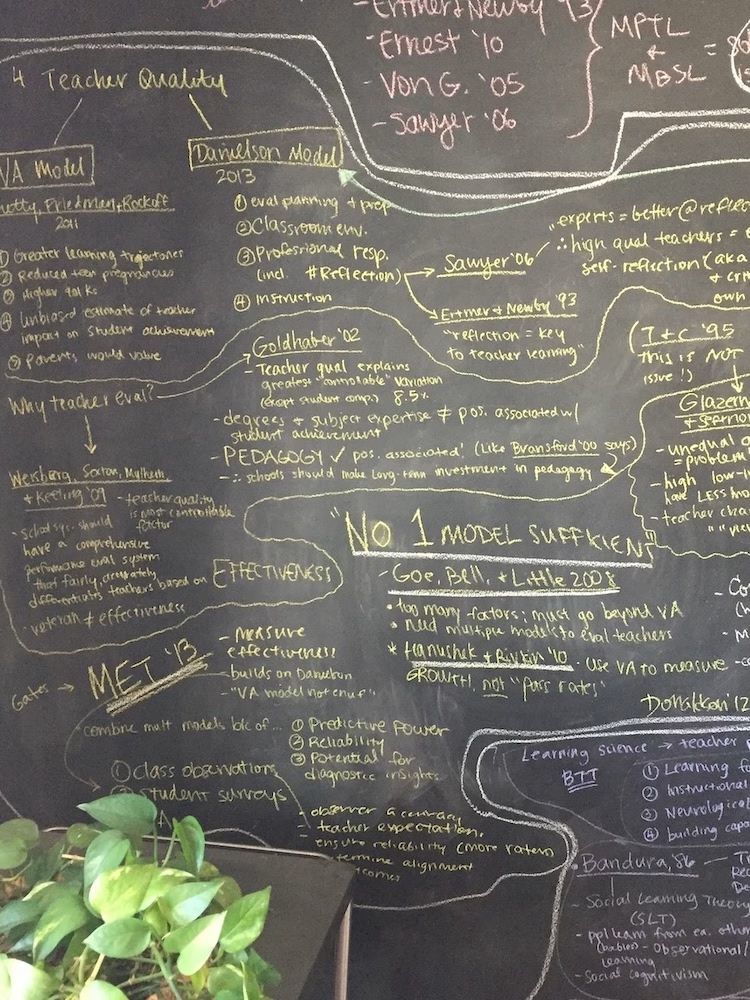
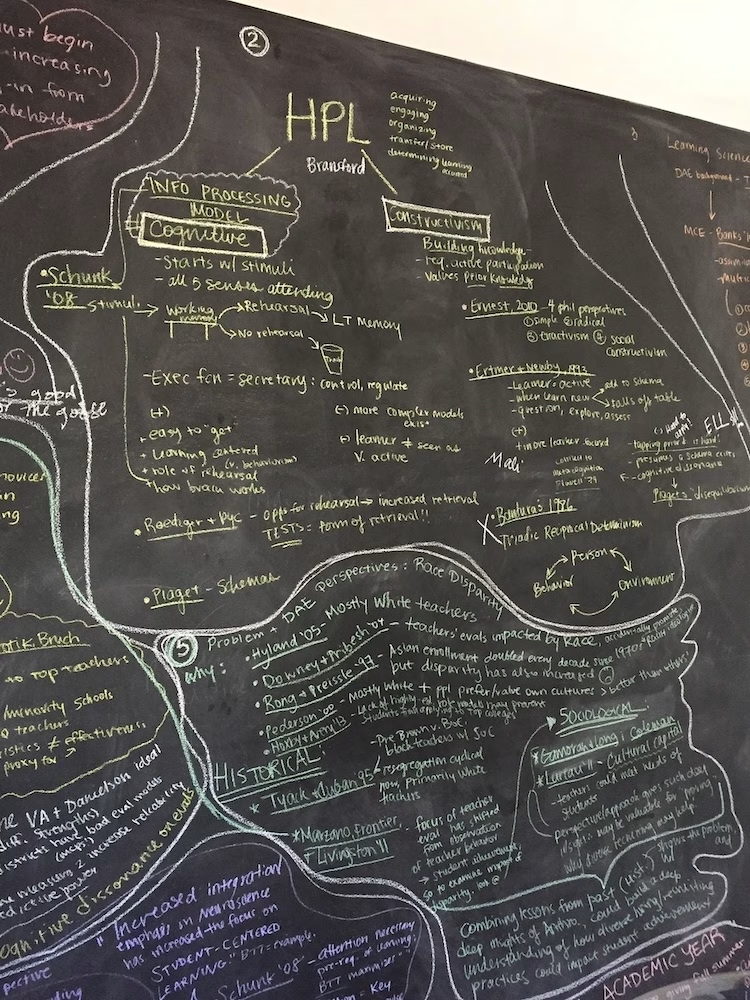
Over the years I’ve learned that while I initially absorb information well by reading, I have to organize my thoughts into maps of interconnected ideas to fully understand them, and then I need to have conversations about them (even imaginary ones) to fully soak in the juice. So I made these insane maps of citations and walked around having conversations with a chalkboard with a baby attached to me, and that’s how I studied for my doctoral comprehensive exams.

I’m writing this because when I was trying to figure out how to prepare for my comps, I mostly found tips about color-coded index cards and how to make sure you were undisturbed while studying (lol). What worked for me was not what was being prescribed by anyone… so I’m sharing my strange chalk wall study method here.
What comps (doctoral comprehensive exams) actually are
If you’re not in a doctoral program: comprehensive exams are a high-stakes synthesis exam most doctoral programs require somewhere around the midpoint. You have to demonstrate command of your entire field’s literature: all the major theorists, the major frameworks and debates, and every methodology you might use. And they’re not multiple choice! They’re long-form can be written or oral or a combination (ours were oral exams). In my Ed.D. program at Johns Hopkins, comps were a multi-hour oral exam.
It’s not uncommon to fail your first attempt or even walk away from a program at this stage. But they’re a critical part of the process to figure out if you have enough expert knowledge of your field to actually do the abstract synthesis work the rest of the dissertation will require.
How I prepared for comps
I prepped for comps for over a year, and for months in that process, worked closely with a study group comprised of me and 3 cohort mates. We got together and had faux interviews about imagined potential exam topics and made connections between ideas through our conversations. We quizzed each other, organized ideas together, and generally just provided a lot of emotional support for one another.
There was a lot of reviewing, synthesizing, and being ready to have an in-depth discussion about a body of literature that itself took years to read and understand.
How the chalk wall came to be
My son was a few months old when comps prep started in earnest. He was not a baby who slept independently or could be put down for more than twenty minutes at a time. Generally he was a baby who wanted to be worn in a wrap to be content, and when he was content, I could study.
The chalk wall sort of happened by accident. During one of my study group’s sessions, we were organizing flash cards (which I also used to study!) by concept.
We were sitting at a table in my kitchen which was next to a wall in our home that was already painted with chalkboard paint (I’d been using it for things like ‘Happy Birthday so-and-so’ until then). I realized that day that the giant chalk wall we were sitting beside might be a good place to start organizing some of these ideas. And so one day after study group session, I started writing on it… and by the end of that first week, the wall was full.
How I studied using the chalk wall
It just so happened that the chalk wall turned out to be exactly what I needed:
- Once my ideas were up on the wall, I could review them while standing or walking with the baby
- The wall meant I wasn’t shuffling through index cards (which I also did at other times) so I had my hands free
- Because it was just there on the wall, I’d find myself reading the information constantly, like while making food or cleaning or doing anything else… there the chalk wall was
- And because it was a giant interconnected mindmap, it let me see and think about the entire scope of what I was learning at once, instead of one note card at a time
There was no rhyme or reason to how things were organized that would make sense to anyone but me. Like, I wish I could say “the top right was frameworks by X; the middle was concepts around Y; the last one is things related to Z.” Yes, I had major theoretical frameworks for my field, with the names of the scholars associated with each in some areas, but those connected to some other ideas related to cultural competence and equity research (the heart of my own work). So ideas were tangled together and just sort of structured in a way that made sense in my head.
It wasn’t pretty and some of the writing was sideways because I ran out of room, and there were a lot of smudged parts, but it was all VISIBLE and I could easily see how everything connected, which I found to be really helpful and arguably better than my flashcards (although, again, I used both!).
Erasing the chalk wall
Around July (my exam was in September), I started having my husband quiz me on sections of the chalk wall.
Once I could discuss that section in-depth, and once I felt like “okay, I’m an expert on topic or concept X,” then we would erase that section of the chalk.
It was like the ultimate crossing-something-off-your-to-do-list thrill.
As we worked our way across the wall, we erased more and more areas (by this point I could cite the studies in my sleep). By the end of August 2016, the wall was clean. All the information had been transferred solidly into my brain.
My son turned six months old that same week, and the chalk-wall was put back to its intended use 🙂

By the time comps day came, I was not even remotely nervous.
Because I knew I knew everything I needed to know.
The comps themselves
…and I was right not to be nervous because I passed on my first attempt! Every question I asked, I felt thoroughly equipped to answer. They might as well have been asking me to describe my favorite books.
Still, I knew I was feeling that way during comps because of how much preparation went into it. That feeling, of knowing I was doing well while doing well, and then finding out officially that I passed remains one of the proudest moments of my life.
We pulled out the fancy champagne and I let myself sit on the couch for a full afternoon not studying anything, which had not happened in months.


The dissertation came after, and that had its own challenges.
But passing comps was a MILESTONE. And it was the moment I knew (like yes I already knew but now I REALLY really knew) that I was actually going to finish this doctorate. Having that hard data point—I’ve passed my comprehensive exams—was like hard proof that I was really going to be able to do this.
Why I’m sharing my chalkboard study method
Because seeing other people’s stories helps!
I didn’t know so many other moms were getting through doctorates and studying in unconventional ways until way later. Once I did, the whole experience felt less weird and more like a shared reality. (I felt similarly the first time I nursed in public after seeing another mom do it. Sometimes you just need to see someone else doing the thing.) And people can’t seek out the people who are doing their version of the thing if those people don’t share their stories. So here you go! (I also wrote a short book called Toddler Weaning about my experience with weaning for the exact same reason. There wasn’t a ton of writing about it out there, so I added some.)
Also, because it worked for me.
If you’re prepping for comps right now
A few things I’d tell my comps-prepping self, if I could:
- Your study system doesn’t have to look like anyone else’s! Whatever works, works. If sitting at a desk works for you then do that, but if walking around your house reading a chalk wall works, do that instead. Or do both.
- Reading aloud is underrated. Especially for being able to discuss something in depth, you can’t just rely on reading things. You need to be hearing yourself TALKING about the material. This is doubly true if you’re doing oral comps.
- Make the ideas visible. Whatever your version of the chalk wall is (whiteboard, a giant sheet of paper, a digital mind map, a wall of post-its, find a way to see all of it at once. See image at the top of this post).
- Try moving while you study. Walking and pacing while talking and studying was helpful for me. Probably won’t suit everyone, but worth trying.
- Build the system around YOUR real life. Don’t try to do what you think a “real” doctoral student does. Like… you’re a real doctoral student. Do you.
Note: This post was originally written back in 2017. It has been edited and republished here in 2025.

